Planetary Transits in Astrology: How They Work and How Long They Last
What planetary transits are in astrology, how they touch your chart, and why some last days and others years, with real 2026–2028 dates.
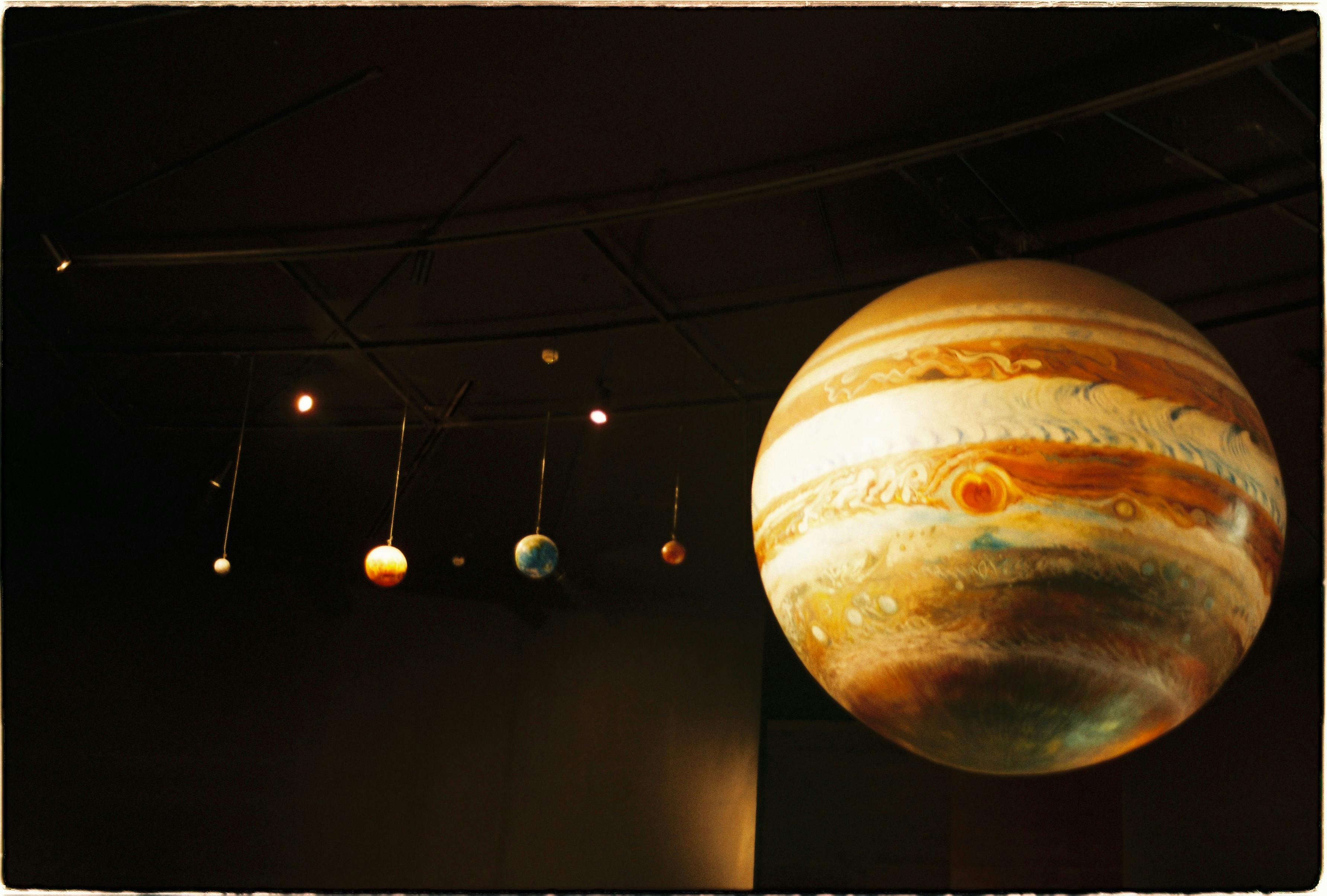
If you've ever opened your chart in the middle of a hard stretch and wondered what's actually going on, you were looking for planetary transits. In astrology, a planetary transit is a planet in the sky today touching a point in your birth chart. Some transits last a few days; Saturn's can last most of a year, and Pluto's can last two years or more.
This is our guide to how transits work: what they touch, how long they last, and how to read where you are in one.
What a planetary transit is
Your birth chart is a snapshot of the sky at the moment you were born. It doesn't move. The planets do. A transit is the relationship between where a planet is now and where something sits in your chart.
A transiting planet touches your chart in two ways:
- By house. As a planet moves through a sign, it moves through whichever of your houses fall in that sign. Saturn in Aries spends its time in the house that holds Aries in your chart. (Starlit Journey uses Placidus houses.)
- By aspect. When the planet reaches a particular angle to one of your natal planets or points, it forms an aspect. The major ones are the conjunction (0°, the same degree), the sextile (60°), the square (90°), the trine (120°) and the opposition (180°).
An aspect is "in orb" when it's close enough to count. Starlit Journey uses a fixed orb for each transiting planet: 2° for the Sun and Moon, 1.5° for Mercury, Venus, Mars, Jupiter and Saturn, and 1° for Uranus, Neptune and Pluto.
Why some transits last days and others last years
It comes down to speed. The Moon crosses a 2° orb in about eight hours. The Sun moves about a degree a day, so a solar transit lasts about four days. Mars, Jupiter and Saturn are slower, and they also turn retrograde, which is where transits stretch out.
When a planet stations retrograde, it stops, backs up over degrees it has already crossed, stops again and goes forward. Any degree inside that loop gets crossed three times: before the retrograde, during it and after it. That's why the same transit can feel like it keeps coming back. It does.
A few real arcs, all calculated with the Swiss Ephemeris:
- Mars over 21° Leo: in orb from November 3, 2026, with exact hits on November 6, March 22, 2027 (retrograde) and April 11, 2027. It lets go on April 20, 2027. Mars on its own would pass in a few days; the retrograde turns it into almost six months.
- Saturn over 12° Aries: in orb since May 18, 2026, exact on June 3 and September 18 (retrograde), with a last exact hit on February 23, 2027. It lets go on March 8, 2027.
- Pluto over 5° Aquarius: in orb since February 27, 2026, exact on April 30 and May 12, 2026, with more exact hits on February 6, August 18 and December 14, 2027. It lets go on November 7, 2028. That's five exact hits over more than two and a half years.
We go deeper on this in how long an astrological transit period lasts.
The phases of a transit
Every transit has the same basic shape. Knowing which part you're in is often more useful than knowing the transit's name.
- Entry. The planet comes into orb. Themes can start to surface before anything is exact.
- Build. It closes in on the exact degree.
- Exact hit. The peak. With a retrograde loop there are usually three.
- Retrograde pass. The planet backs over the same degree: the revision round, the second lap over the same ground.
- Separation. The planet moves out of orb and doesn't come back on this cycle. That date is the honest answer to "when does this end?"
Fast planets and slow planets
The fast planets (the Moon, Sun, Mercury and Venus) color days and weeks. They're worth knowing about, but they're rarely what's behind a whole chapter of your life.
The slow ones are. Each has its own character, and it helps to know them the way you'd know people. Here's how we read them:
- Jupiter, the generous king, expands whatever it touches, the good and the bad. It spends about a year in a sign. Right now it's in Leo, stationing retrograde on December 12, 2026; here's Jupiter's full arc through Leo.
- Saturn, the stern father, tests what you've built because he wants it to hold. About two and a half years per sign. It's in Aries now and turns direct on December 10, 2026; see what Saturn's December station means.
- Uranus is the awakener: the sudden change or insight you didn't see coming, which can shake you out of a rut. It's in Gemini until 2032.
- Neptune blurs edges and dissolves old certainties; it's in early Aries.
- Pluto, lord of the underworld, governs endings that make room for new beginnings. It moved into Aquarius for good in November 2024 and stays for many years, and its transits to a single point can last years; here's how long Pluto square the Moon lasts, with exact dates.
Mars sits in between: usually quick, but every two years or so it turns retrograde and slows right down. Its next loop starts with the shadow on November 5, 2026; here's the Mars retrograde 2027 timeline, start to finish.
How to read your own transits
You need three things: your birth chart (with your birth time, for the Moon, the Ascendant and the houses), the current positions of the planets, and a way to see each transit as a whole rather than one day at a time.
- Start with the slow planets. Look for Jupiter, Saturn, Uranus, Neptune and Pluto within orb of your Sun, Moon, Ascendant and personal planets.
- Find the whole arc. For each one, find when it came into orb, every exact hit, and when it separates.
- Place yourself. Are you before the first hit, between passes, or past the last one?
- Read the house. Which part of your life does the transiting planet's house describe?
Most free tools show one moment: what's exact today. That's a snapshot. What you usually want in a hard stretch is the whole chapter: where it started, where you are, and when it ends.
What transits can and can't tell you
Transits describe timing and themes. They don't predict events. The dates are astronomical facts: Saturn really does turn direct at 7°56' Aries on December 10, 2026. What it means in your life is an open question, and the most useful way we've found to hold it is as a phase with a shape, not a forecast.
See your own arcs
Want the long view of 2027 in one place? The free 2027 Transit Planner is just below: every slow transit of the year, by date and degree, with space to plan.
If you'd rather see every active transit in your own chart as a full arc, from entry to separation, that's what Starlit Journey does. The positions come from the Swiss Ephemeris. The plain-language notes on each phase are written by AI, and labeled that way.
The free 2027 Transit Planner includes phase worksheets for every slow transit in your year.